Burrowing Owl
The Carpinteria Salt Marsh greater ecosystem area would like to welcome its newest resident, a Burrowing Owl (Athene cunicularia).
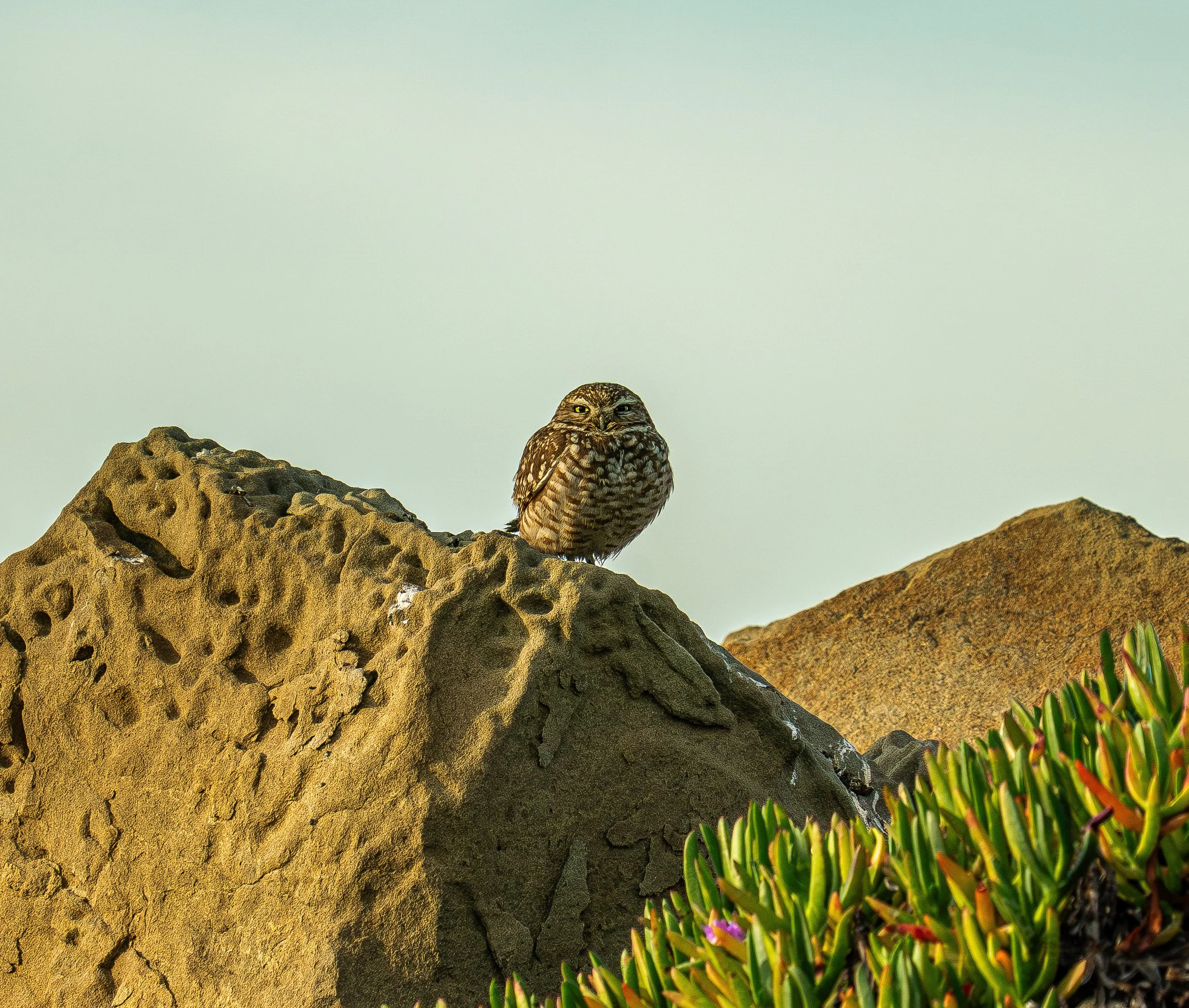
Photo Credit: John Lewis 12/2025
This charismatic and shy bird has now taken up residency within the vacant lot at the eastern end of the sand spit near the mouth of the estuary at 501 Sand Point Road and the location of a proposed development. This bird is only 6-8 inches tall, has been seen within the Carpinteria Salt Marsh on the rarest of occasions but is a native to the area, and is known to over winter in the region. This specific bird was initially observed on 12/7/25 by Laurel Luby and Tom Beland, and has been seen daily since. It is now documented within the California Natural Diversity Database with CDFW, posted on eBird, was seen during the Santa Barbara Christmas Bird Count, and was the star attraction during a recent Audubon Birding Tour to the area led by Mark Holmgren. Matter of fact, this Burrowing Owl is the only one that has been observed within Santa Barbara County this year.
Burrowing Owls have been seen within the Carpinteria Salt Marsh just a handful of times, and specifically now three times at 501 Sand Point, the first time in the early 2000’s, and then again in 2013. Burrowing Owls forage in the dune and coastal mate vegetation (ESHA) for grubs and small creatures. That vacant lot at 501 provides ideal and proven preferred habitat for the owl. Any level of disturbance and particularly a development would significantly impact this rear and important species.
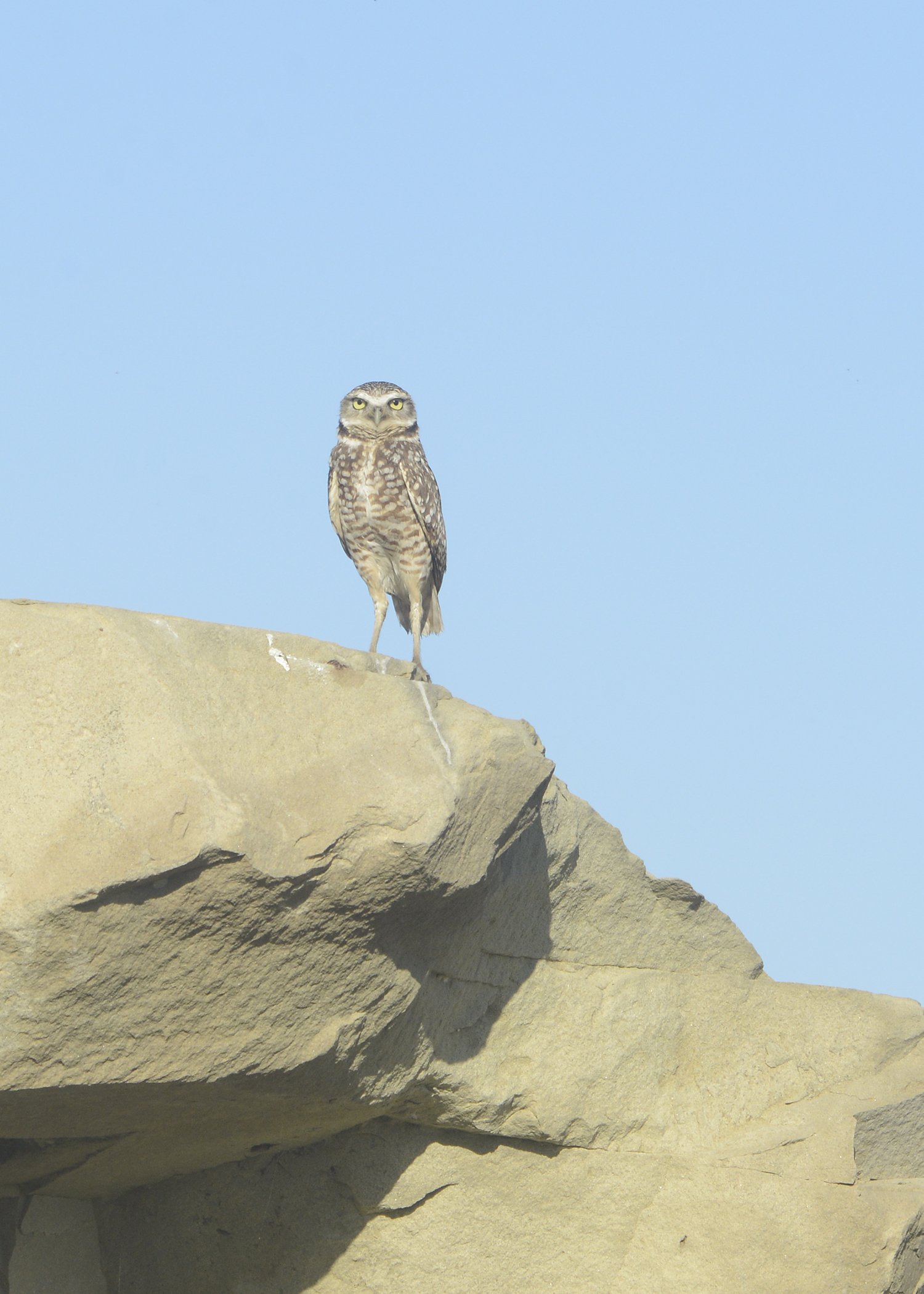
Photo Credit: Terri Matkins 3/2013
From Wikipedia, Burrowing Owls, sometimes referred to as Western Burrowing Owls, are a small, long-legged, primarily terrestrial—though not flightless—species of owl native to the open landscapes of North and South America. They are typically found in grassland, rangelands, agricultural areas, deserts, or any other open, dry area with low vegetation. They nest and roost in burrows, and, despite their common name, do not often construct these dwellings themselves, rather repurposing disused burrows or tunnels previously excavated and inhabited by other species, such as American badgers, foxes, ground squirrels or prairie dogs, among others.
Unlike most owls, burrowing owls are often active during the day, although they tend to avoid the heat of midday. But, similar to many other species of owls, they are mostly crepuscular hunters, as they can utilize their night vision and attuned hearing to maximum potential during sunrise and sunset. Having evolved to live on open grasslands and prairie habitat (as well as badlands, chaparral and desert ecosystems), as opposed to dense forest, the burrowing owls have developed longer legs than other owls, a trait which enables it to sprint when pursuing its prey, not dissimilarly to the greater roadrunner, as well as providing momentum when taking flight; however, burrowing owls typically only become airborne for short bursts, such as when fleeing threats, and typically do not fly very high off of the ground.
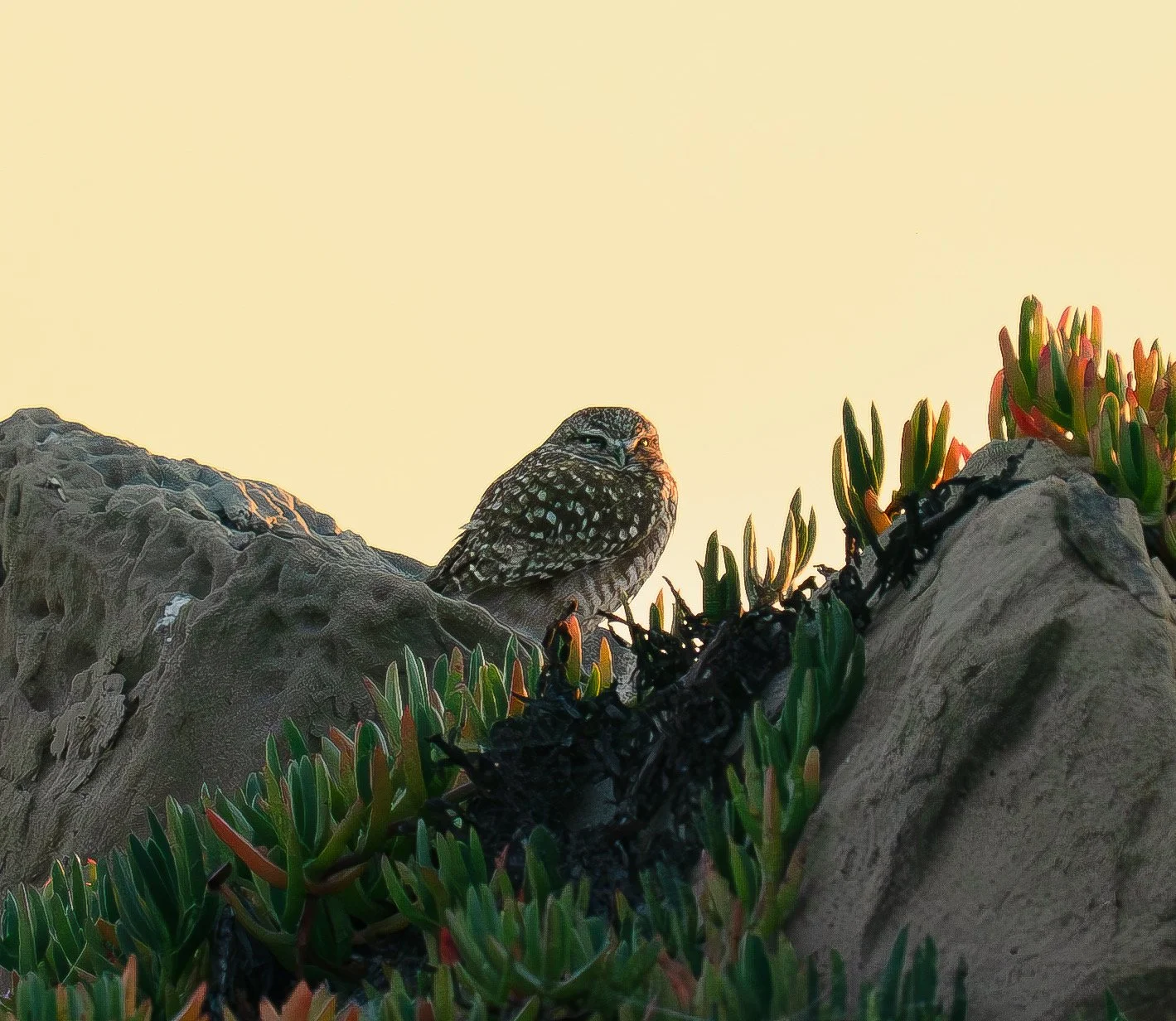
Photo Credit: John Lewis 1/2026
Under Federal law, there is no current effort underway to list the Burrowing Owl. The species is recognized as a Bird of Conservation Concern by the US Fish and Wildlife Service and is protected under the Migratory Bird Treaty Act, but it is not a candidate species nor the subject of any active petition or review for ESA listing. However, at the State level, there is an active effort to list the Western Burrowing Owl under California Endangered Species Act (CESA). On March 5, 2024, the Center for Biological Diversity, Defenders of Wildlife, and Burrowing Owl Preservation Society submitted a petition to list three populations (San Francisco Bay Area, Central-Western California, and Southwestern California) as Endangered and two others (Central Valley and South Coast and Peninsular Ranges) as threatened. The California Fish and Game Commission accepted the petition in October, 2024, designating the species as a candidate under California Endangered Species Act (CESA), which provides full protection against take of any kind during the review process.